
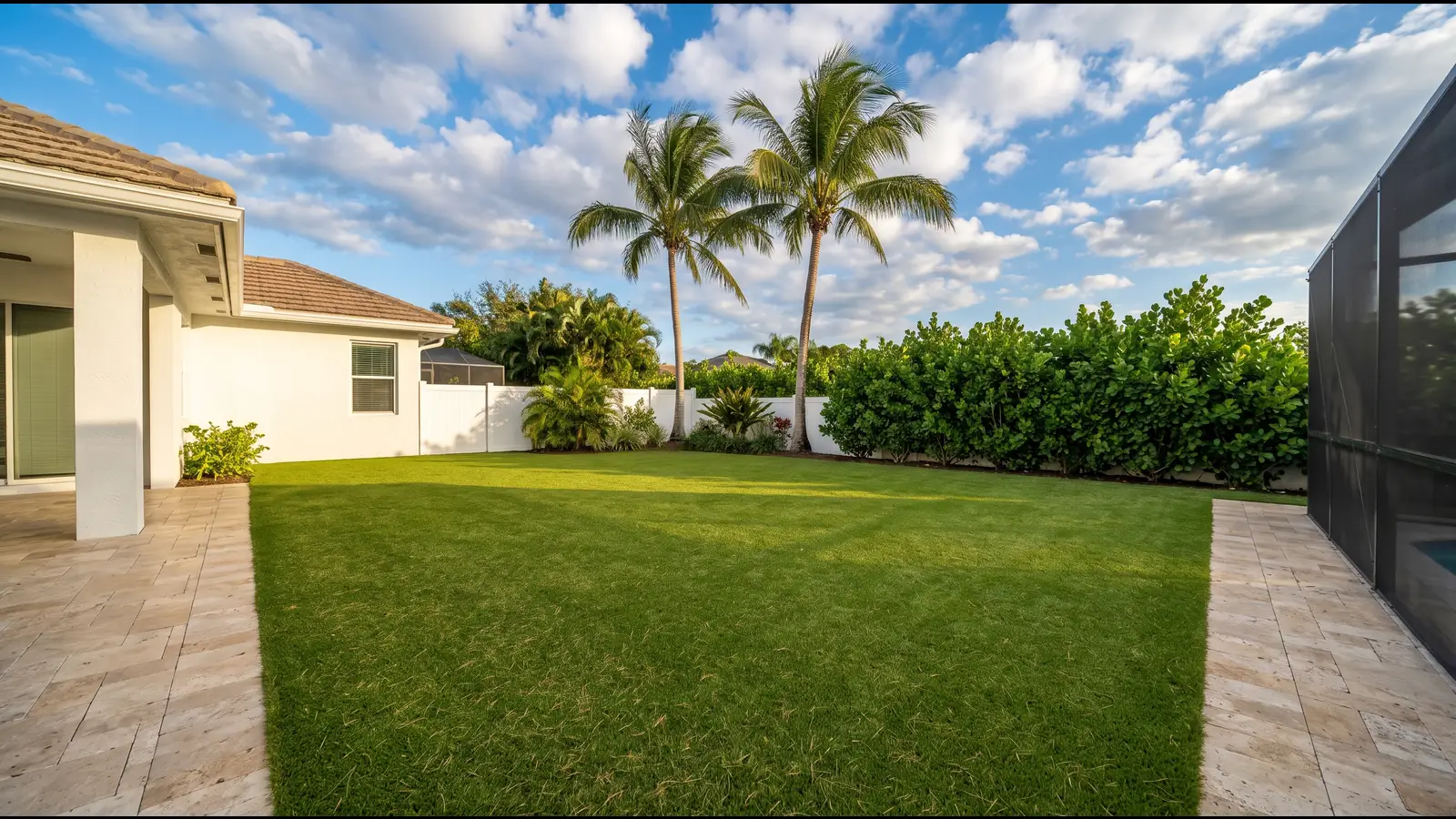
Putting Green Installation Options for Backyards
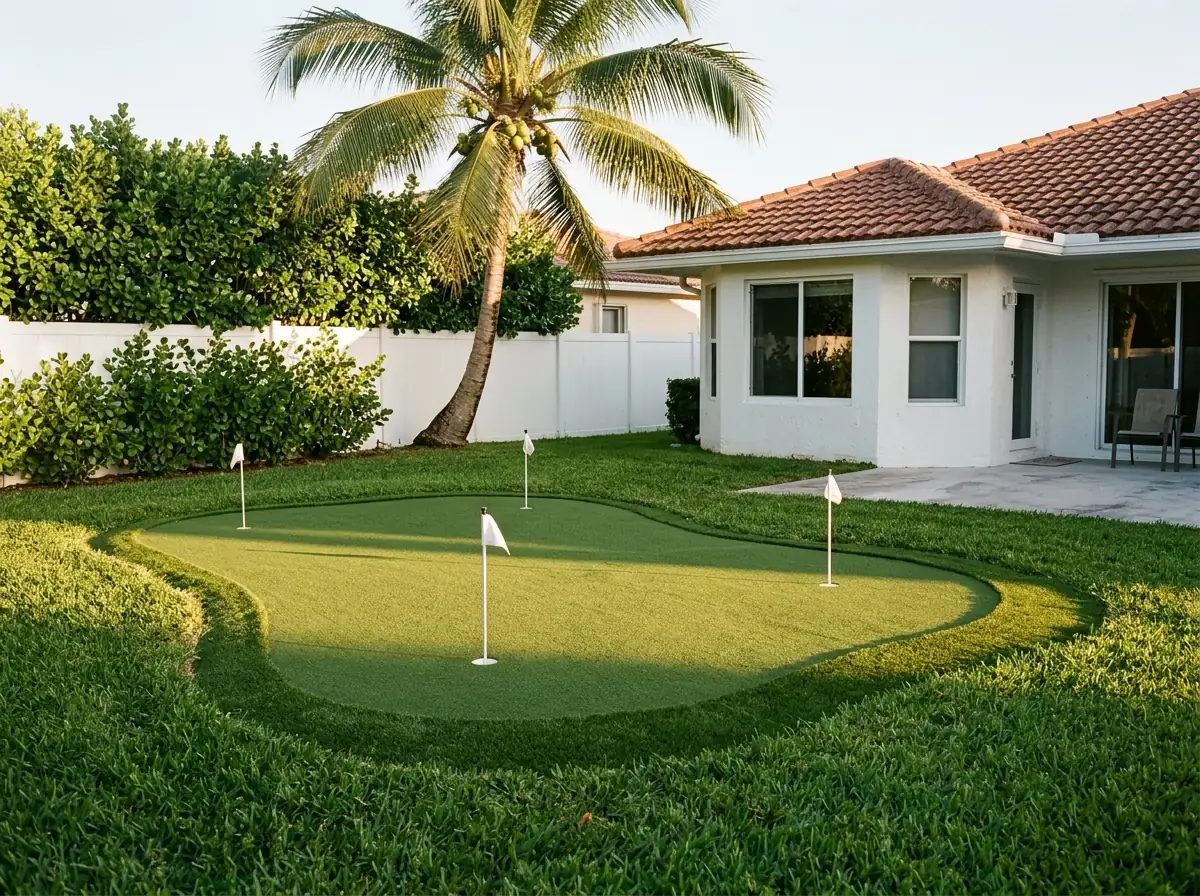
Backyard putting greens
Putting turf is a different product from lawn turf. HomeGuide describes it as shorter, denser fiber made for golf practice, and that density is what lets a ball roll true. Angi treats about 250 sq ft as a typical small home green and breaks one that size down like this:
- Putting turf: $1,250 to $5,000
- Installation labor: $750 to $2,250
- Digging out about a cubic yard of soil: $50 to $200
That adds up to $2,050 to $7,450, before cups and flags. Decide where the cups go before anything is cut. Angi lists hard-to-move holes as a drawback of artificial greens, and adding or moving one later runs about $150 a hole.
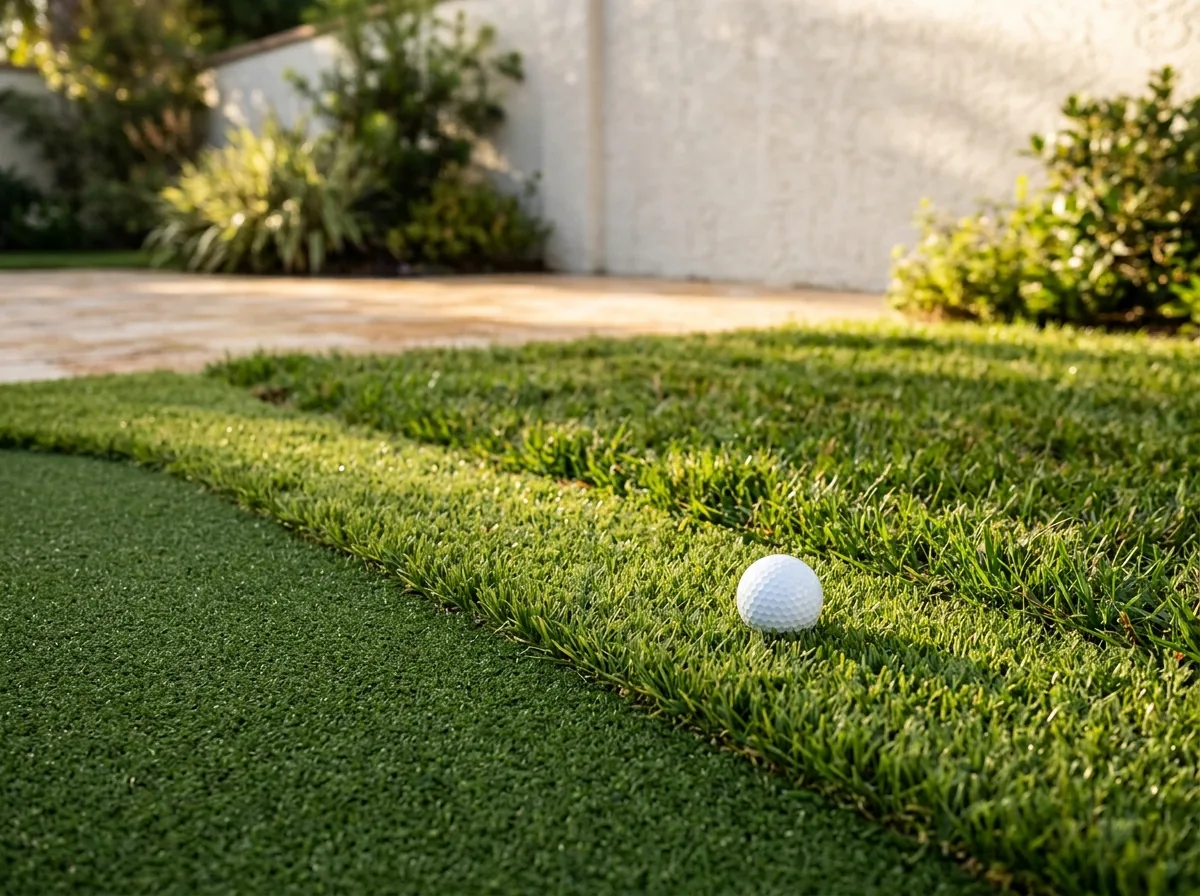
Greens with a chipping fringe or collar
A fringe is a ring of taller turf around the putting surface. It frames the green and gives you somewhere to chip from, so the short game gets practice too. Every extra cut of turf costs something, though. Angi says more fringe and fairway cuts can raise the total by up to 10%. HomeGuide groups fringe work with contouring and bunkers and puts the labor increase at 20% or more. Ask for the green priced with and without the collar so you can see what it adds.
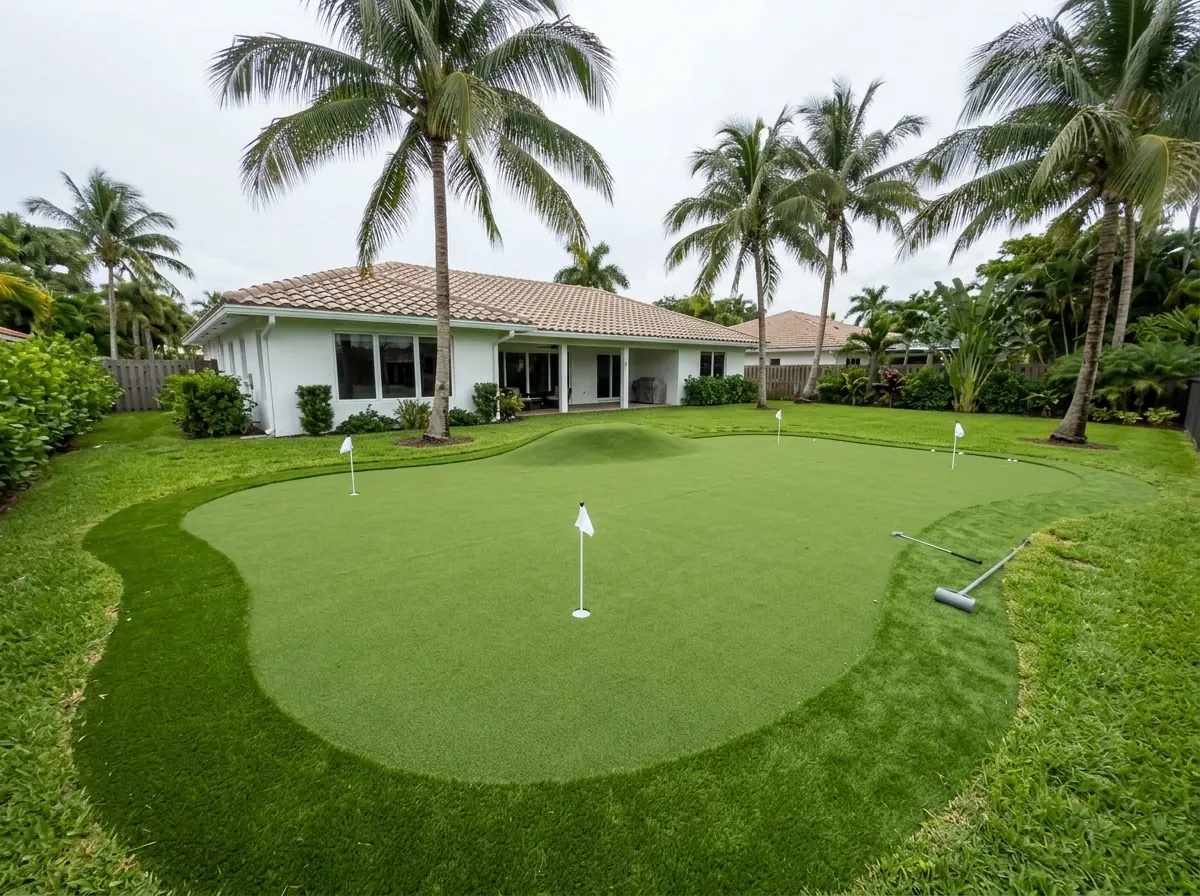
Contoured, multi-cup greens
A dead-flat green gets dull quickly. Breaks, tiers and a mound change every putt, and all of that shaping happens in the base before the turf goes down. HomeGuide recommends building on class 1 or 2 permeable base rock. In a flat yard every slope has to be built up from base material, which is extra labor. Specialty features such as tiered slopes or lighting add $100 to $2,500 or more in HomeGuide's guide, and Angi prices outdoor lighting alone at $2,000 to $4,500. Florida's base and drainage rules for single-family lots are on the backyard artificial grass page.
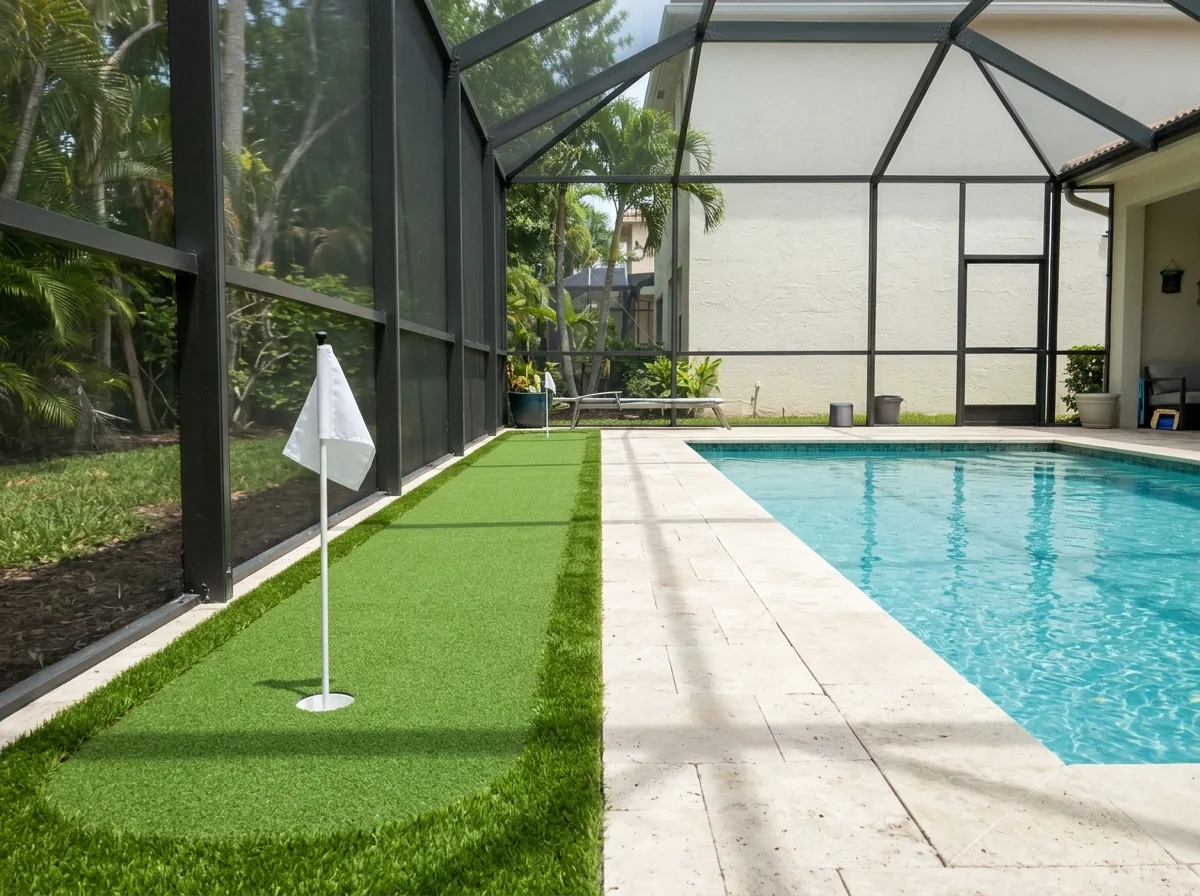
Poolside and patio putting greens
A green beside the pool or at the end of the patio puts practice a few steps from the lanai. The spot affects the price: Angi says pool areas and concrete surfaces cost more to install on than an ordinary backyard. A green laid over a slab needs a plan for where the rain goes, and turf at the water's edge takes splash and pool chemicals every day. The details are on artificial grass around pools and artificial grass on a patio.
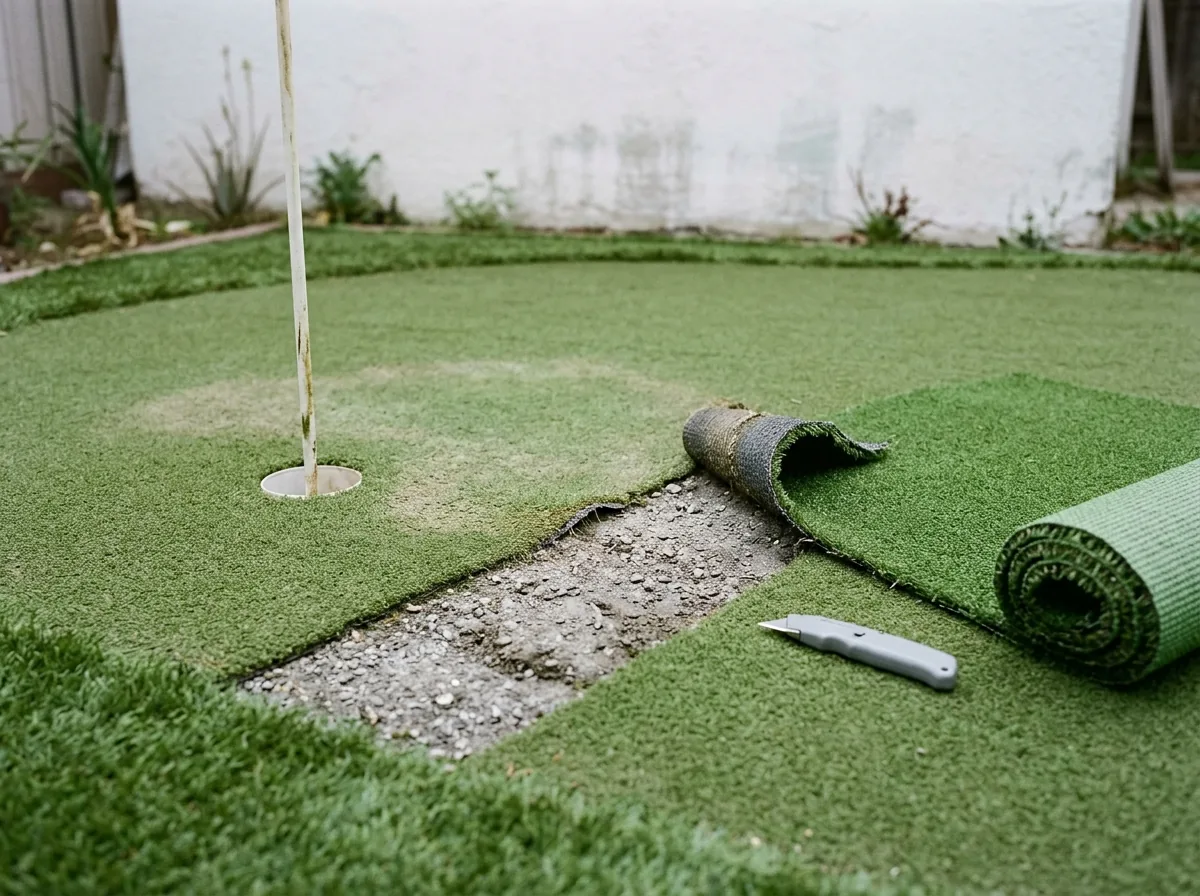
Re-surfacing a worn green
When a green stops rolling true, the base usually decides between a patch and a rebuild. Angi prices patching at $2 to $8 per square foot. If the base underneath is still level and draining, ask whether new turf can go over it. If it has sunk or washed out, it needs rebuilding first. Artificial turf replacement covers removing old turf and redoing the base.
Why Pompano Beach homeowners call Pompano Beach Turf
- Free, no-obligation estimates
- Square footage, turf and price on paper before anyone digs
- Your request goes to one installer, not a call list
- No fee to you for the introduction
Putting Green Cost and Build Time
HomeGuide's price per square foot falls as the green gets bigger:
| Green size | Installed, per sq ft | Typical total |
|---|---|---|
| Small, 100 to 400 sq ft | $25 to $40 | $2,500 to $16,000 |
| Medium, 401 to 2,000 sq ft | $20 to $30 | $8,000 to $60,000 |
| Large, 2,001 sq ft and up | $15 to $25 | $30,000 to $75,000+ |
Angi's national range for a finished backyard green is $3,500 to $9,000. Most of what you pay for is skill rather than material: HomeGuide puts labor at 70% to 95% of a green's installed cost. Afterward, HomeGuide budgets $250 to $550 a year for cleaning, small repairs and infill.
Once the crew is on site, Angi says a professional green is often done in a day or two, and HomeGuide gives 1 to 5 days for most builds and 2 weeks or more for large, complex ones. The city permit comes before any of that; see the permit, survey and engineer paperwork.
What to Check Before You Book a Green
A full written quote
HomeGuide's advice is a final quote that shows the size, materials, special features, site work, any permit fees and the schedule. It notes that contractors usually include the permit in the estimate, but ask to be sure.The base
Ask what goes under the turf, how deep it is and how the green drains after a summer downpour. Standing water on a green changes how the ball rolls. More on that in turf drainage.Seams
A seam across your putting line shows up in every putt. Ask where the seams fall and how they're joined.Warranty
Ask what the turf maker covers and what the installer covers for their own work. Turf repair explains how the two differ.Indoors instead?
A garage or spare-room green is a different build, covered on indoor putting greens.