
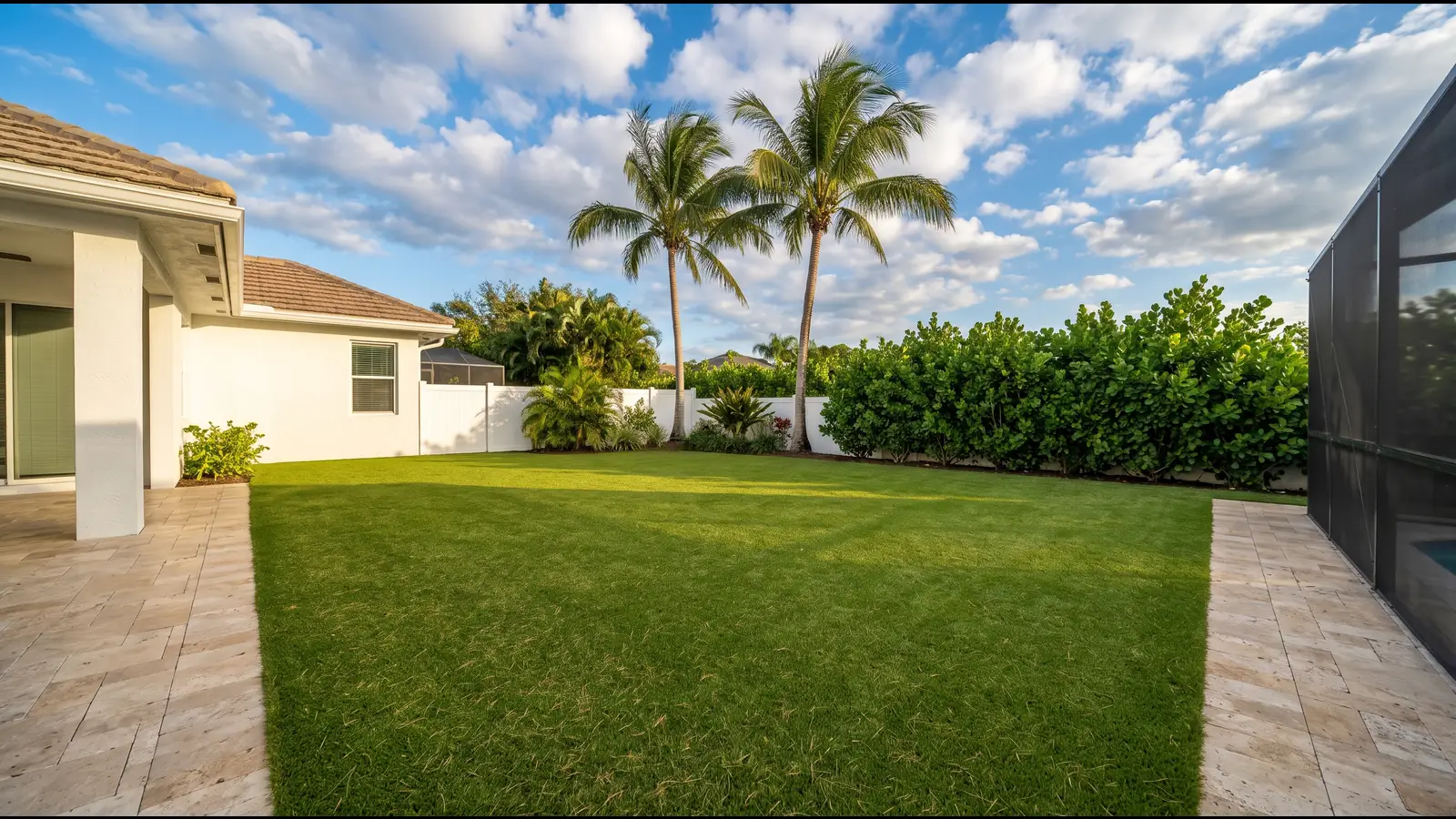
Artificial Grass Infill Types
Infill is the loose layer brushed down between the blades. It holds the turf flat (Lawn Love notes that turf without it can shift on windy days), keeps the blades standing and, in Angi's words, protects the turf from the sun. Florida's turf rule limits a home lawn to natural infill: washed silica sand, rock or shell, plus silica sand with a non-toxic coating. The rest of that rule is summarized on the backyard page.
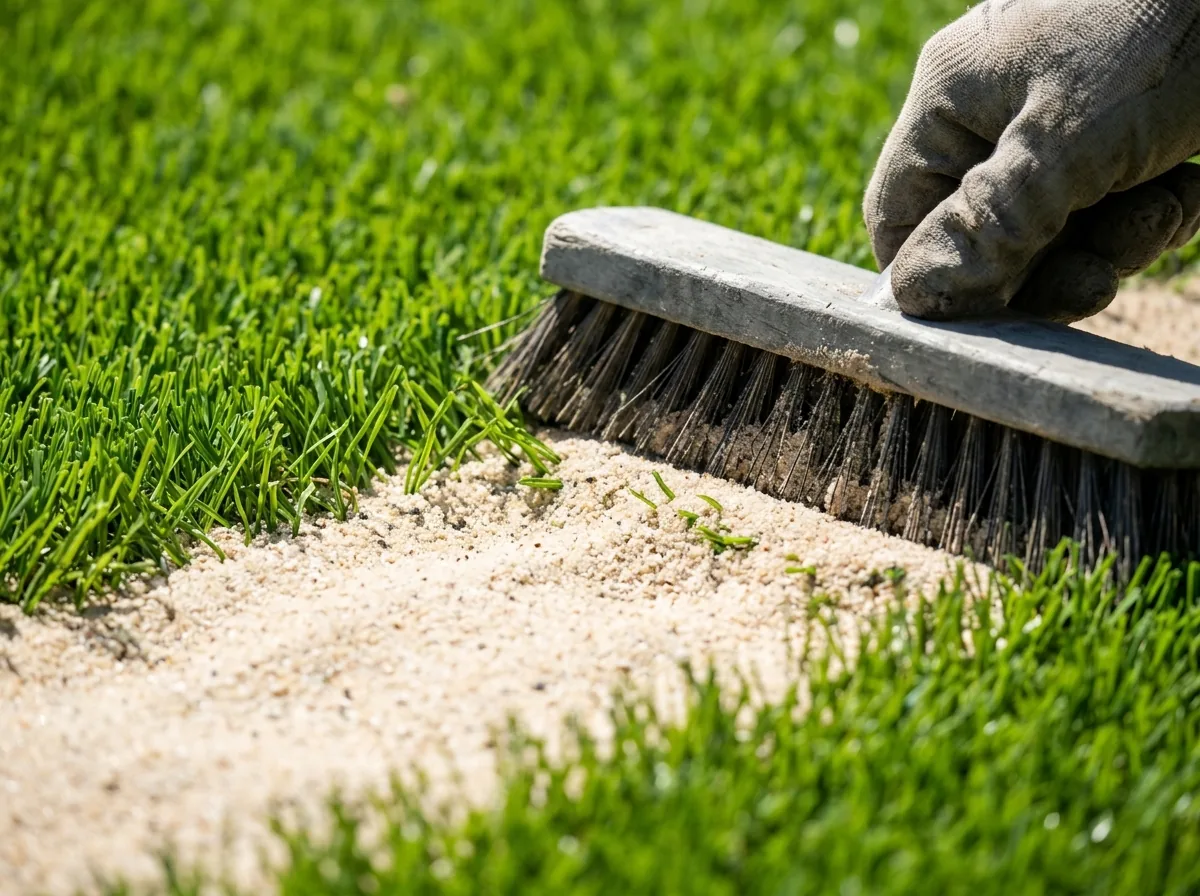
Silica Sand
Plain silica sand is the default and the cheapest infill, at $0.30 a pound in Angi's table. It's heavy, so it does the main job of weighing the turf down, and Lawn Love says it runs slightly cooler in sun than rubber. The downside is texture: Lawn Love also calls it more abrasive if someone falls and slides on it.
- Price: $0.30 a pound (Angi).
- Amount: about 1 pound per square foot (Angi, Lawn Love).
- Best for: ordinary lawns and as the base layer under a pet infill.
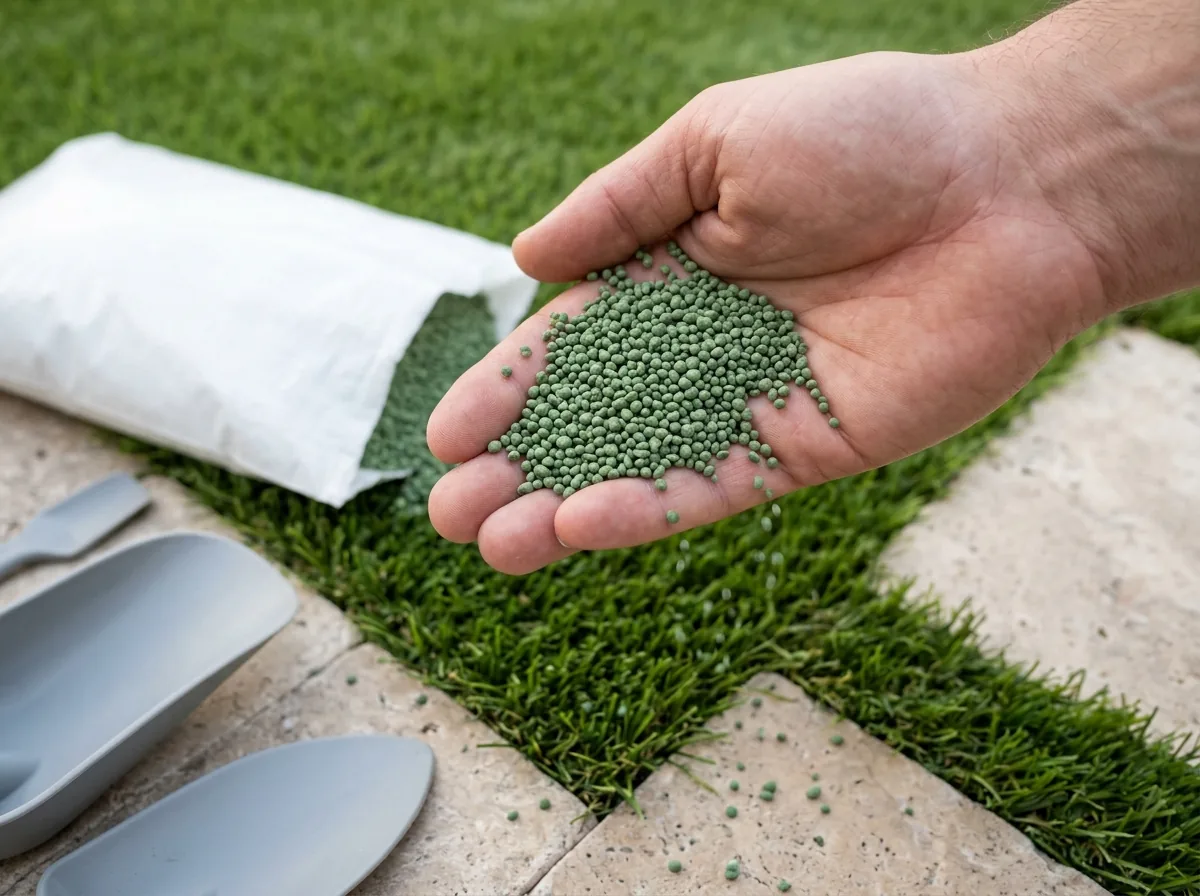
Coated Sand
Coated sand is silica sand with an acrylic or similar coating. Angi lists acrylic-coated sand at $1 a pound. Lawn Love describes one coated product as having softer edges that are easier on the blades than plain silica sand, plus an antimicrobial coating against odor-causing bacteria. Florida's rule allows coated silica sand on home lawns.
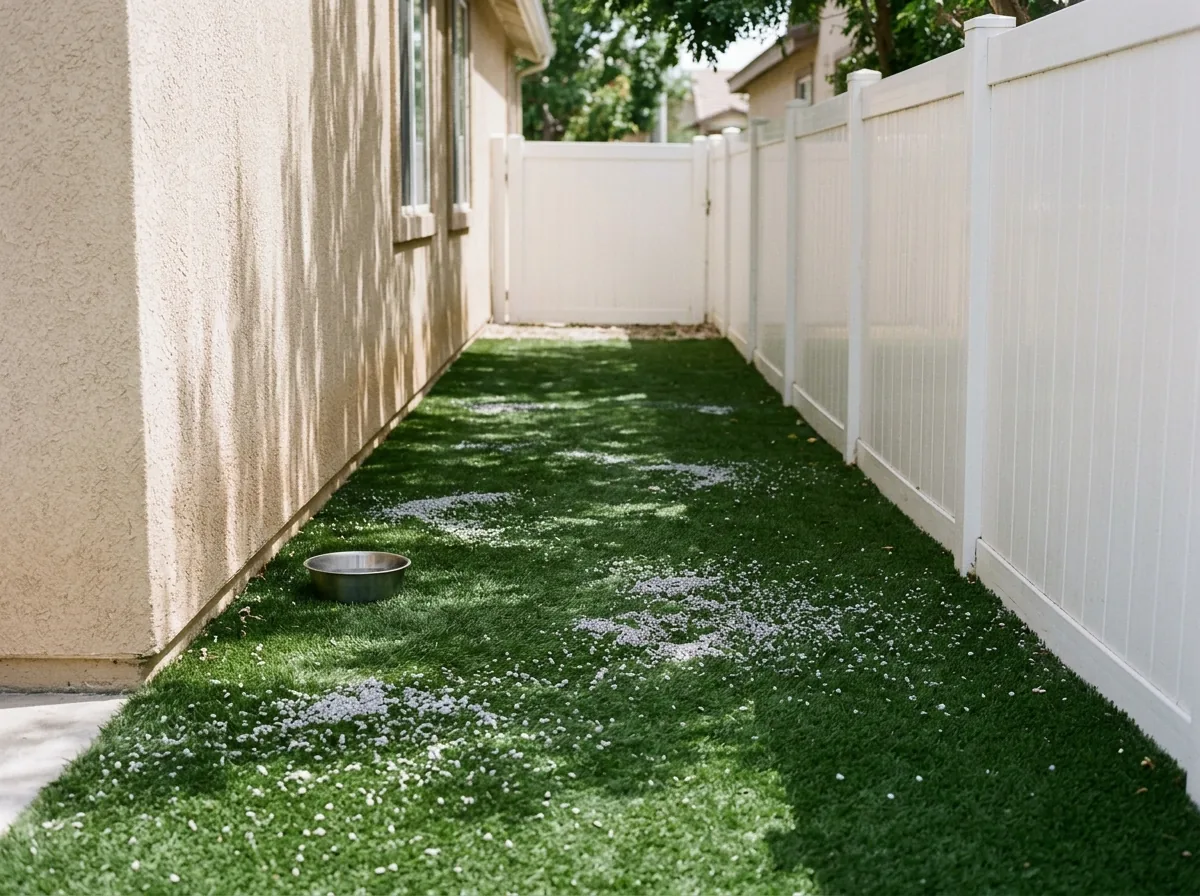
Zeolite for Pet Areas
Zeolite is a mineral infill sold for pet urine odor. Angi lists it at $1.15 a pound. Lawn Love calls it the best option for pet smells and suggests putting it down as a top layer over a heavier sand base rather than on its own. No neutral source we found explains how well it works, so treat odor claims as the seller's. Rinsing still matters: Angi says to hose urine spots before they dry. For the full pet setup, see artificial grass for dogs.
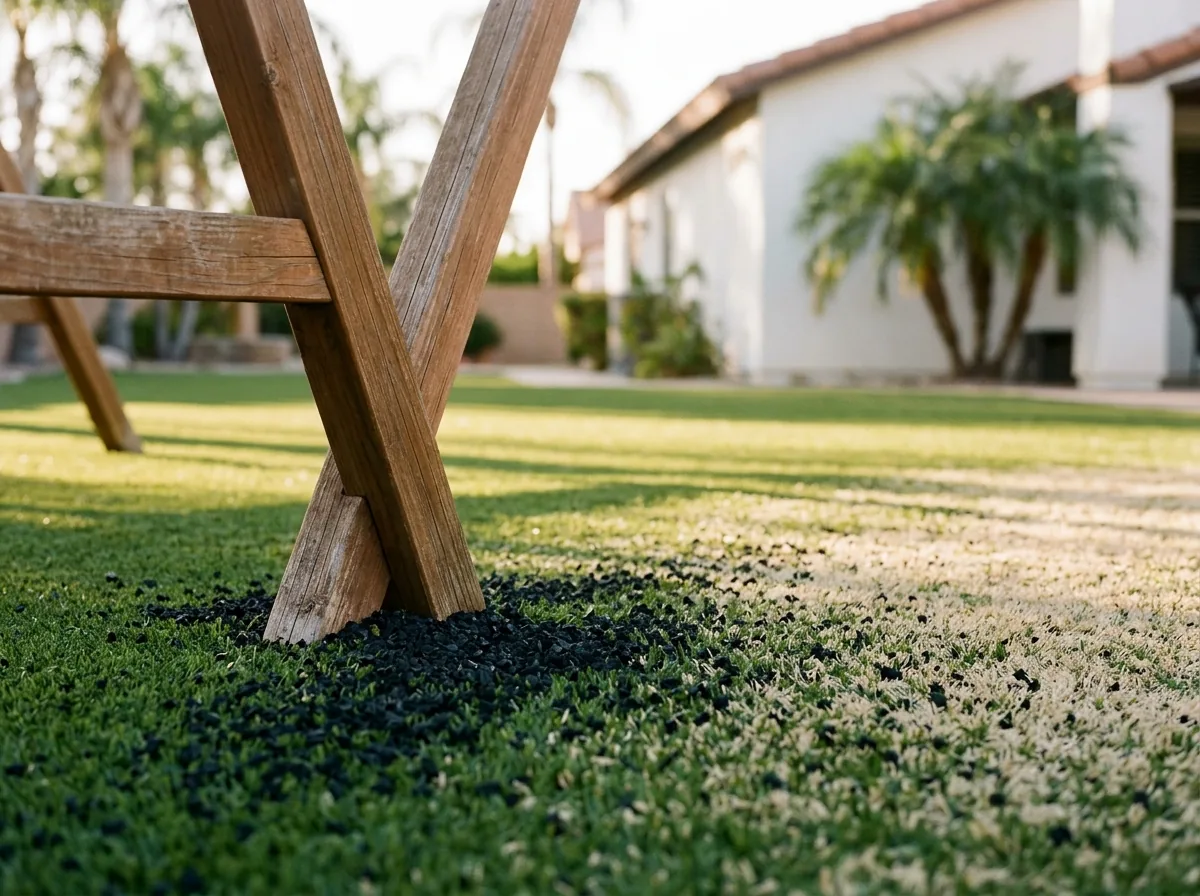
Rubber and Organic Infills
Crumb rubber, made from recycled tires, costs $1.75 a pound in Angi's table, and Lawn Love says it gets the hottest of the common infills in direct sun. Florida's rule allows rubber and other synthetic infill on single-family lots only inside the footprint of playground equipment. The health questions around tire crumb are covered on the playground turf page.
Organic infills (HomeGuide mentions "organic alternatives") fall under the rule's "other natural material". We found no neutral data on how they hold up in South Florida rain, so ask the installer how a given product behaves after a wet summer before choosing it.
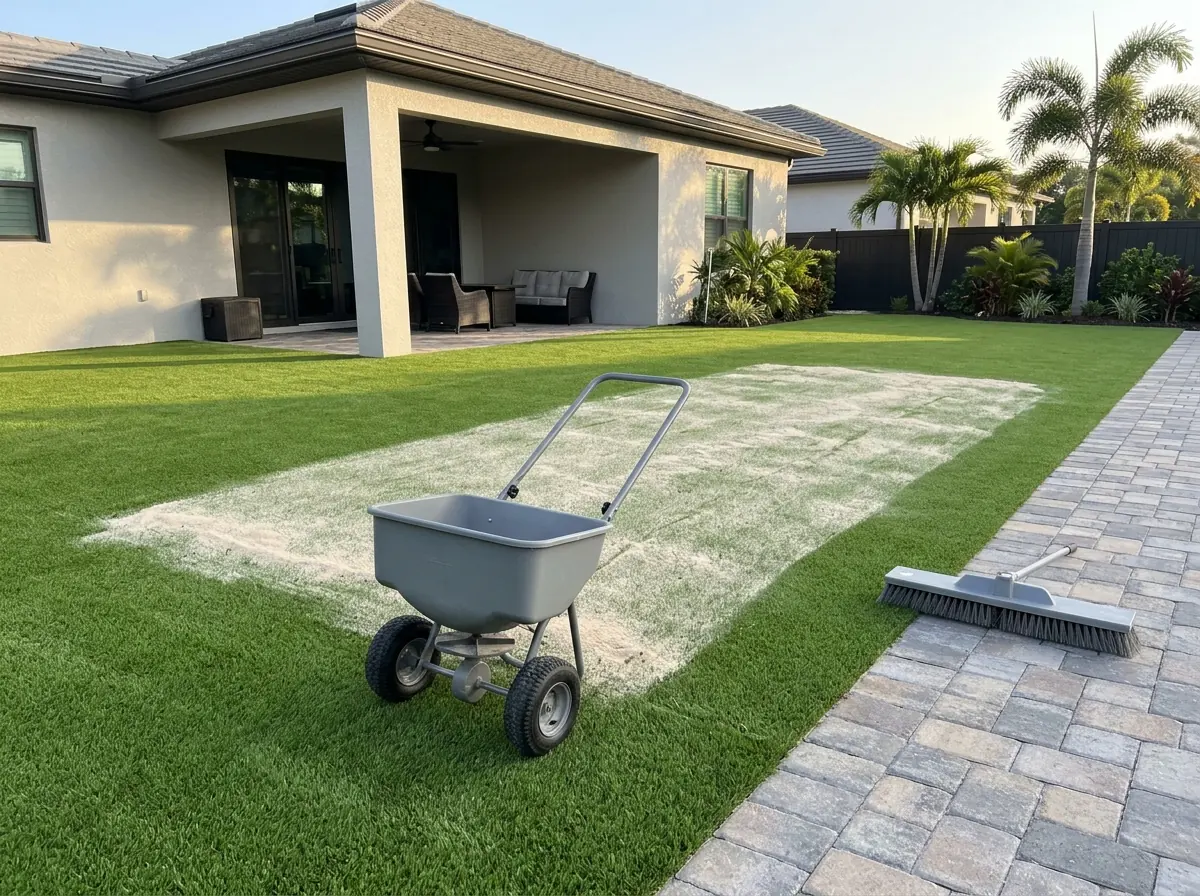
Infill Top-Ups and Re-Brushing
Infill thins out over the years, and a leaf vacuum sucks it straight up (LawnStarter and Lawn Love both warn against using one). Lawn Love says a top-up may be needed after a few years. A top-up is spread with a drop spreader and brushed in so the blades stand above it.
- Replenishment: around $85, not necessarily every year (LawnStarter).
- Brushing: around $165 a year (LawnStarter); a power broom rents for about $59 a day (Lawn Love).
- How much to leave showing: Fixr calls 20 millimeters of blade above the infill standard.
Why Pompano Beach homeowners call Pompano Beach Turf
- Free, no-obligation estimates
- Square footage, turf and price on paper before anyone digs
- Your request goes to one installer, not a call list
- No fee to you for the introduction
How Much Infill a Lawn Needs and What It Costs
The working figure in the guides is 1 pound per square foot, so a 500 sq ft lawn takes roughly 500 pounds. Price then depends almost entirely on the type.
| Infill | Price per pound (Angi) | Florida home lawns |
|---|---|---|
| Silica sand | $0.30 | Allowed |
| Acrylic-coated sand | $1 | Allowed (coated silica sand) |
| Zeolite | $1.15 | Not named in the rule; ask whether the product counts as natural material |
| Crumb rubber | $1.75 | Only inside the footprint of playground equipment |
Lawn Love gives a broader $0.30 to $1.80 a pound, and its infill guide puts the cost per square foot at $0.30 to $0.90. Angi's ongoing-cost table repeats the $0.30 to $1.75 a pound for later replacement infill. These are material prices; labor to spread and brush it comes on top.
Questions to Ask About Infill
Which types, and what grain size?
Bob Vila lists "What are the different types and sizes of infills that you use?" among the questions to ask an installer.Does the infill meet Florida's rule?
For a single-family lot, it should be natural or coated silica sand unless it's under play equipment.How many pounds per square foot will go down,
and is it listed on the quote?Does the turf need infill at all?
Lawn Love notes that pet turf is usually made without synthetic infill, so check what the turf maker specifies.What happens to the infill in heavy rain?
Ask how the drainage and base handle a summer downpour without washing it to one end of the yard.