
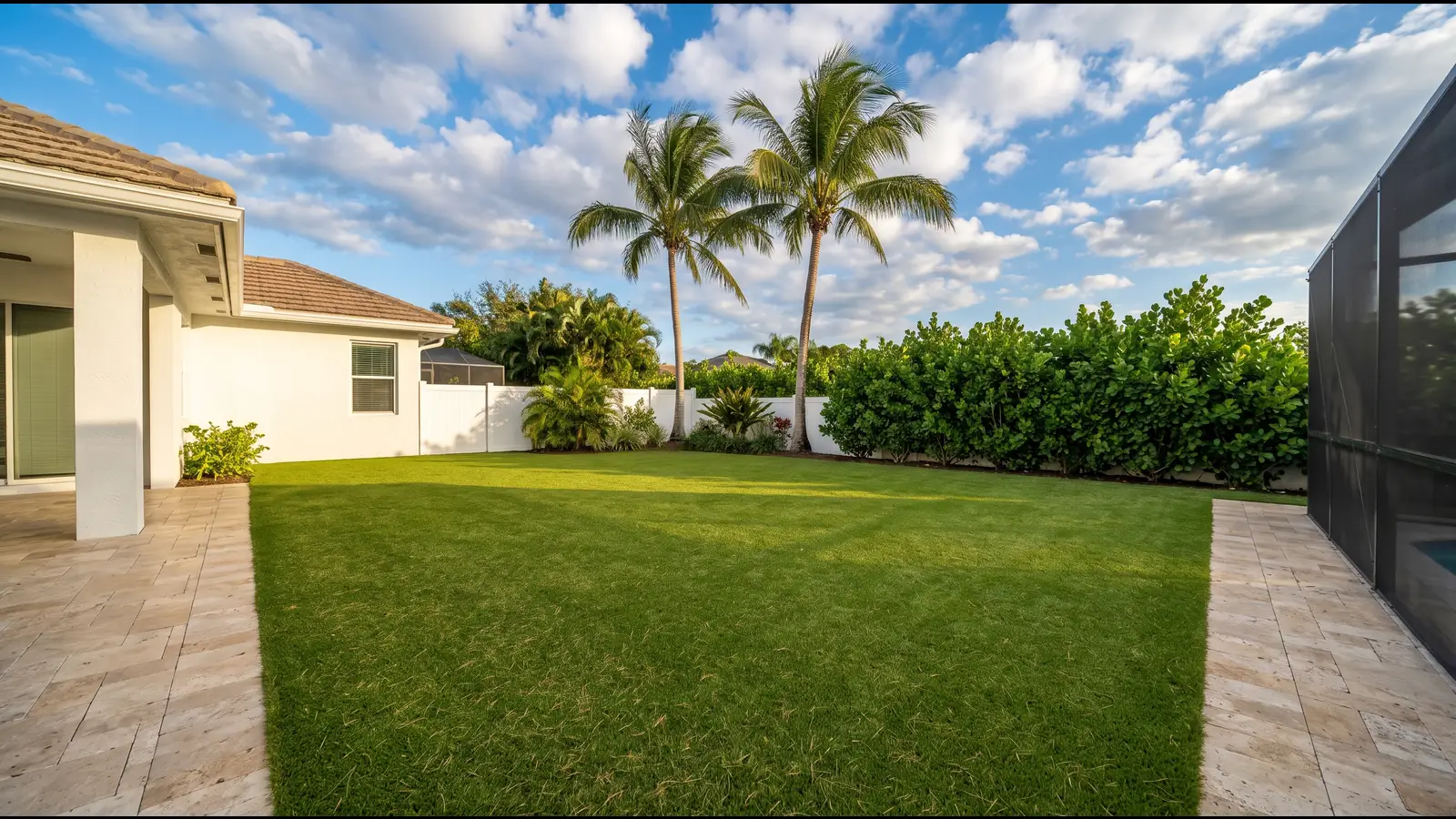
Artificial Grass Repair Types: Seams, Patches, Edges and Storm Damage
Angi's list of warning signs starts with splitting seams and lifting edges, and it says both can be fixed before more damage sets in if they're caught early. Each of the five repairs below takes a different fix.
Seam Repair
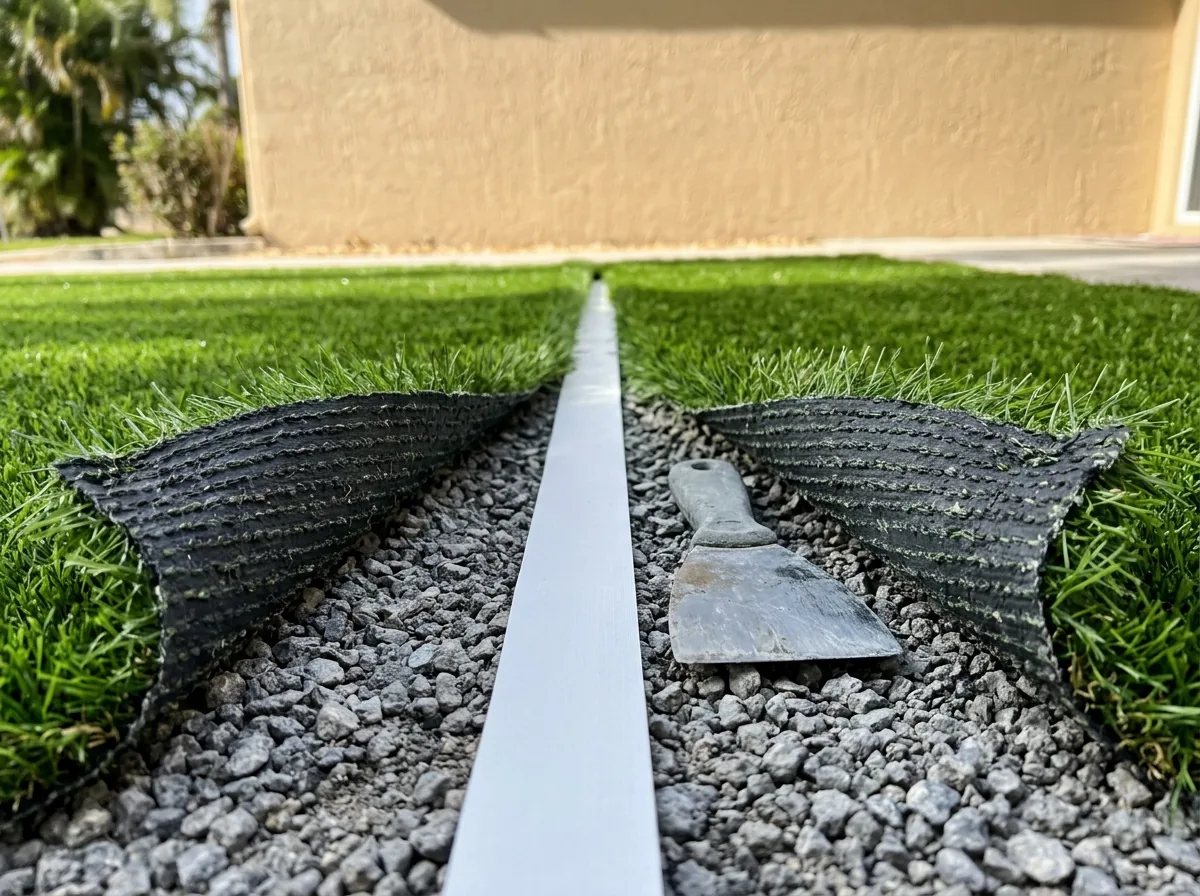
A seam that has pulled apart shows as a straight line of backing or tape between two pieces of turf. Bob Vila's cost guide describes the secure method as seaming glue, seaming tape and nails together, and warns that a nails-only seam can loosen over time. A proper repair folds both edges back, cleans the base, lays new tape and glues the backing down.
- Seam tape comes 4, 6, 8 or 12 inches wide, at $0.50 to $1.40 per linear foot (Lawn Love). The material is cheap; the labor is what you pay for.
- Some turf adhesives need 24 hours before foot traffic.
- Ask whether the blades on both sides will lie in the same direction afterward. A seam shows most where the grain flips.
Patches for Burns, Holes and Pet Damage
Burn marks often trace back to a window. Angi says turf generally holds up to 175 to 200 °F, but reflected glare from low-E glass or a mirror can run hotter than that, and its upkeep advice includes keeping reflective materials from focusing light on the lawn.
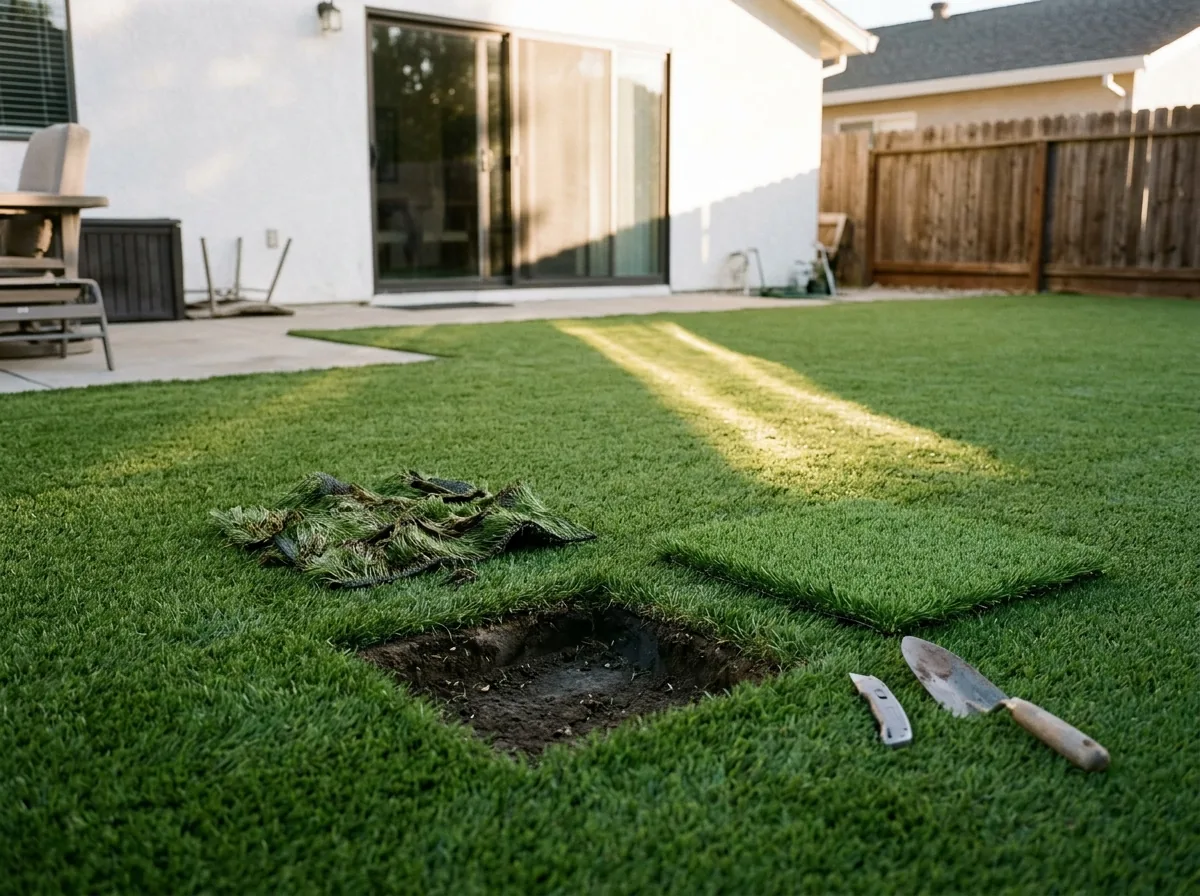
- A patch means cutting out the damaged square, fitting a new piece, then taping and gluing it in like a seam.
- New turf can read brighter than old turf. Angi notes uneven coloring where one side of a lawn gets more sun, so ask to see the replacement piece against your lawn.
- For dogs that dig or chew, a secure fit at the edges makes them less likely to tear the turf up (Angi).
Lifting Edges and Re-Nailing
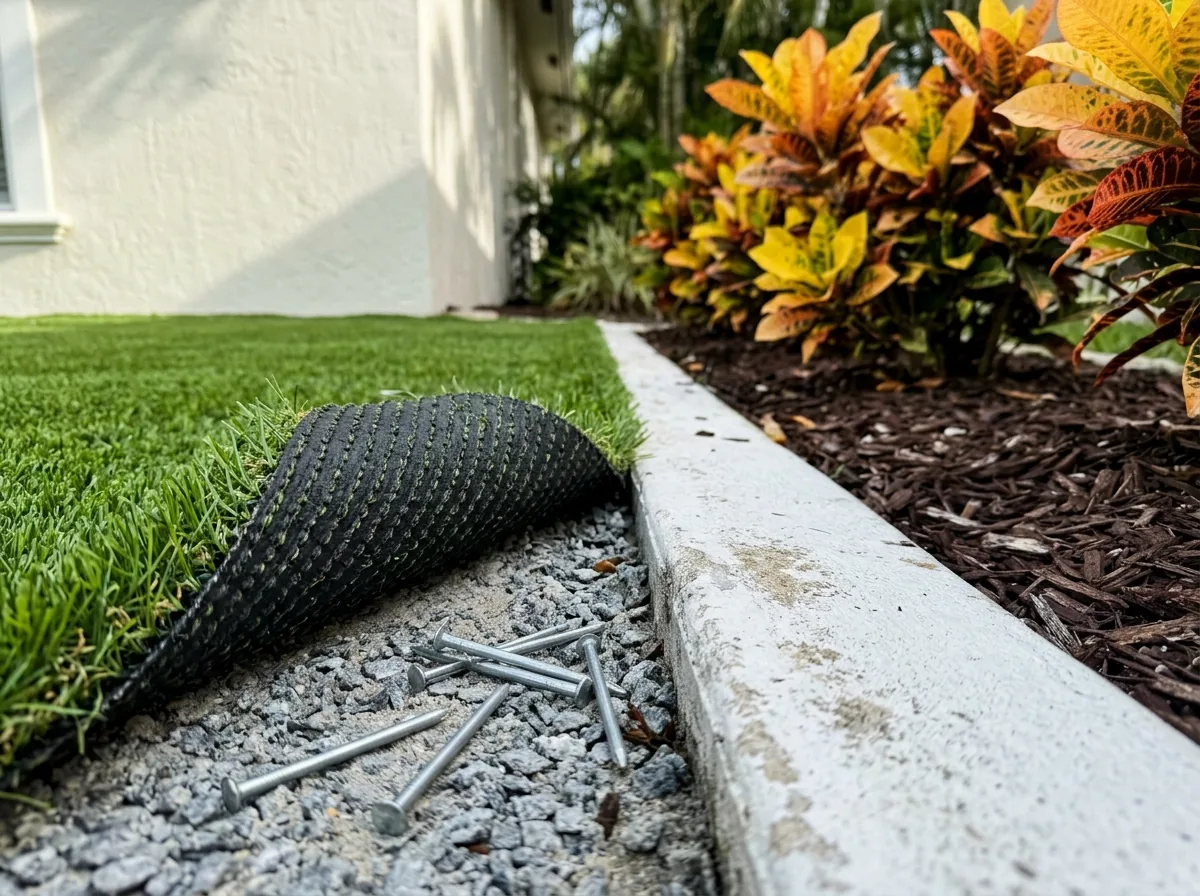
Angi lists lifting as one result of poor installation, and a dog working at a corner speeds it up. The fix is to fold the edge back, top up and compact the base under it, then fasten it down again. Angi's how-to guide spaces 7-inch galvanized stakes or staples every 6 inches, and Lawn Love counts tucking the margins back in as routine upkeep. Florida also has an anchoring standard for edges and seams; see the state turf rules on the backyard page.
Wrinkles and Ripples
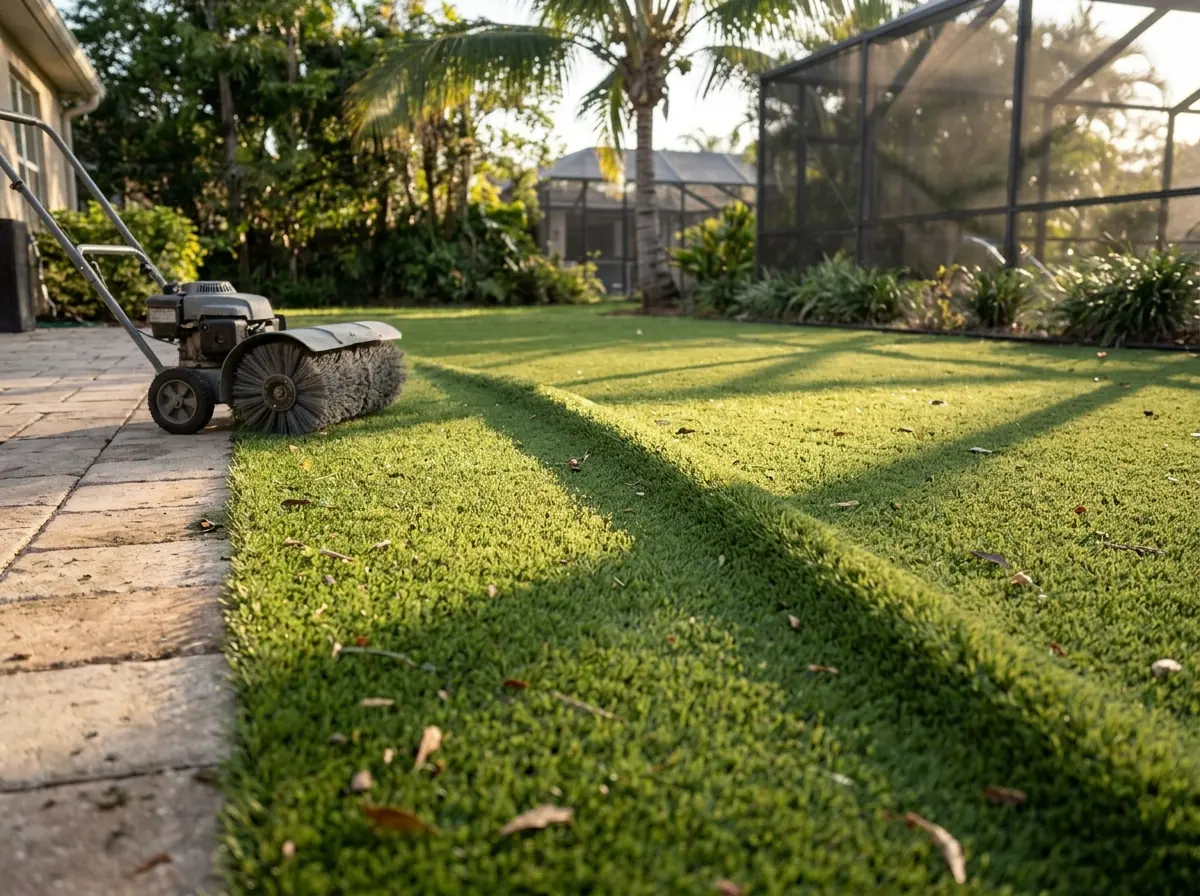
A ripple means the turf has grown loose against its fastenings or the ground under it has moved. Angi's sub-base guide explains that soil swells when wet and shrinks as it dries, while a stone sub-base doesn't, and that is what keeps the turf free of wrinkles and soft spots. Burrowing animals can sink patches of ground too. The repair is to release the turf, re-level the base and stretch it back flat before refastening.
- LawnStarter says some pros fold minor rippling and tearing into a brushing visit.
- If the ripple keeps coming back in the same place, the base is the problem, not the turf. That's a drainage and base job.
Storm Damage After Hurricanes
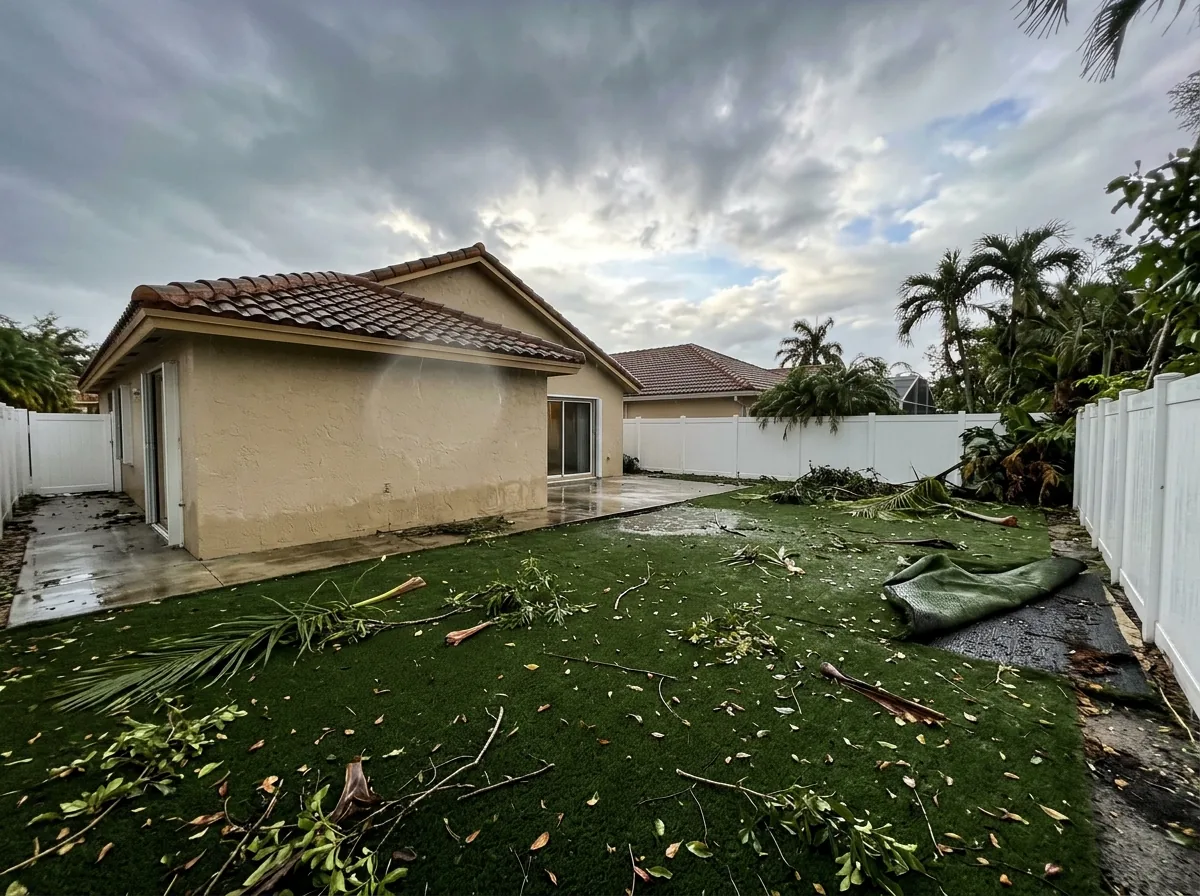
Hurricane season runs from June 1 to November 30. NOAA puts the peak at September 10, with most activity between mid-August and mid-October. After a storm, look for debris on the lawn and for edges or seams the wind got under.
- Clear fronds and branches quickly. Angi warns that debris left lying traps moisture and damages the turf.
- Walk the perimeter and every seam before you hose it off; a lifted edge is easier to re-fasten before it tears.
- Photograph damage before anything is moved if you plan to claim on insurance or a warranty.
Why Pompano Beach homeowners call Pompano Beach Turf
- Free, no-obligation estimates
- Square footage, turf and price on paper before anyone digs
- Your request goes to one installer, not a call list
- No fee to you for the introduction
Artificial Grass Repair Cost and Warranty Questions
Angi's figure of $2 to $10 per square foot covers repairs or replacement, so a single seam sits at the low end and a large patch near the top. No guide prices a single seam or patch on its own, so get a written price for the specific fix.
Before you pay for a repair, find out whether a warranty already covers it. Two warranties are usually in play:
Manufacturer warranty
covers the product. Fixr says most turf makers give at least 5 years. Pompano Beach's 2025 ordinance asks for at least 8 years against color fading and loss of pile height for turf counted as a pervious surface.Workmanship warranty
comes from whoever installed it and covers the installation. Turf sellers put it at 1 to 3 years against 10 to 15 for the product, but that's a vendor figure, not a neutral survey.- Bob Vila adds that some makers honor their warranty only on professional installs.
Angi's advice is to check what each warranty covers, how long it lasts and what a claim requires. Do that before anyone cuts the turf.
When the problems stack up (seams opening, faded color, matted blades, water pooling), patching stops making sense. Angi notes that turf past its prime can't really be revived, only replaced in the affected area. Compare the repair quote with the cost of artificial turf replacement before deciding.